Sticky Patio Door This Fall? When Track & Hardware Fixes Beat Glass Replacement in Metro Vancouver
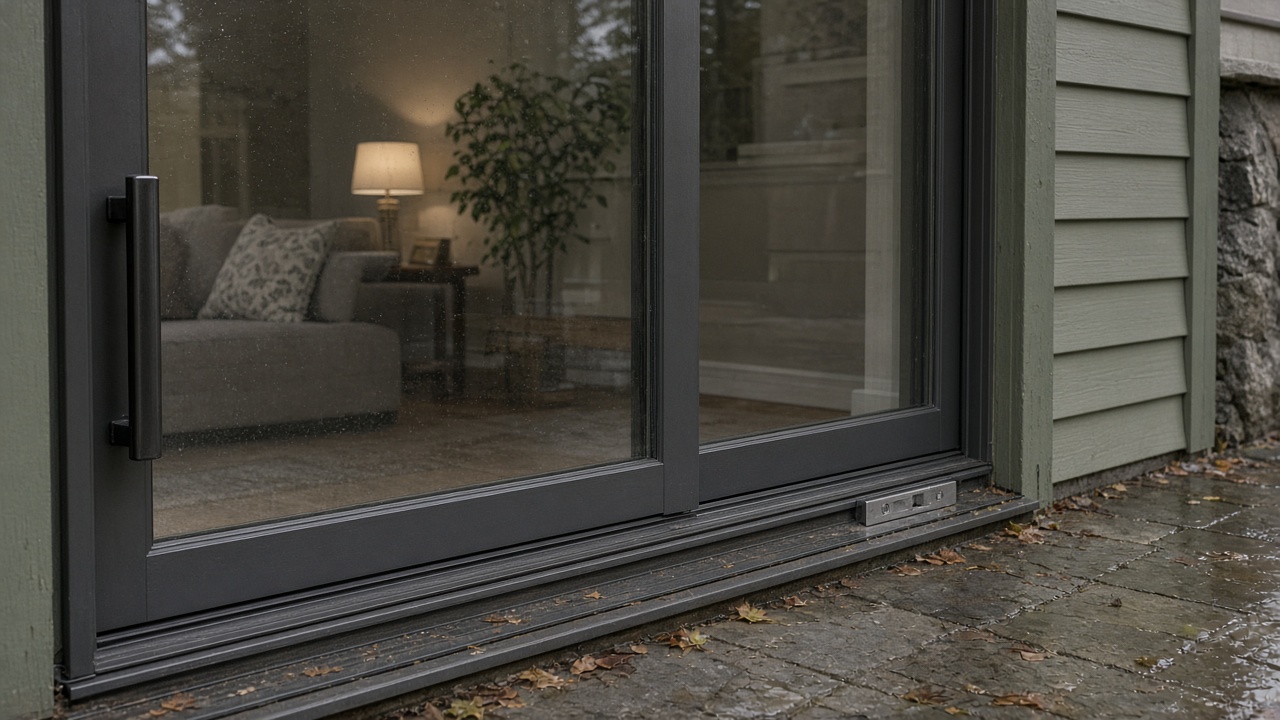
A patio door that scrapes, sticks, or will not latch is a common wet-season complaint across Metro Vancouver. Leaves pack the track, rollers flatten, locks drift, and frames shift after another coastal summer. The next question is often wrong: “Do I need new glass?”
Often you need a track and hardware look first. Sometimes the glass is the problem—fogged between the panes, cracked, or shattered. This guide separates operation problems (track, rollers, locks, frame) from glass problems (failed IGU, impact damage) so you do not order a custom lite for a door that will not slide—or ignore a failed seal because the panel still moves.
If the glass is already milky between the panes, use the patio door fogging glass-only vs full door decision tree. For a year-round overview, see patio door glass replacement vs full replacement. Here we stay on sticky, scraping, and drafty operation before winter rain worsens drafts and security.
Why patio doors get sticky in Vancouver’s wet fall
Sliding doors ride on tracks and rollers. French doors rely on hinge and latch alignment. Bifold and multi-slide systems stack more panels—and more places for grit and wear. Across the Lower Mainland and Fraser Valley, fall adds track debris, moisture that swells wood and weatherstrip, roller wear under heavy tempered lites, lock misalignment, and sill or frame movement.
None of that automatically means the insulated glass unit has failed. Clear glass can sit in a door that will not open. Fogged glass can sit in a door that still rolls. Treating both as one “patio door problem” wastes time.
VanCity’s patio door glass work covers sliding, French, and bifold systems for foggy IGUs, broken panels, and insulated upgrades when the door structure can stay. Residential patio installation and repair is the right entry when operation and glass both need an on-site look.
Operation problems: track, rollers, locks, and frame
Start here when the glass looks clear and the complaint is how the door moves.
Track debris and dirty rails
Grit in the bottom track makes panels jump, scrape, or stop short. Wet fall packs that grit into a paste. Vacuuming and wiping the track is a fair first check; if the door still binds after a clean rail, look at rollers and alignment next. Cleaning alone will not fix flattened wheels or a bent rail.
Worn rollers and locks that will not engage
Sliding doors that feel heavy, drop at one corner, or grind metal-on-metal often have roller issues. Replacing glass will not restore lift if the wheels have collapsed. A door that slides but will not latch is a security and weatherstrip problem—misaligned keeps and worn latches matter before winter storms. Note grinding, corner drop, and latch miss when you request a quote.
Frame movement and drafts with clear glass
If the panel wedges at the top or bottom only, or the gap to the jamb is uneven, the frame or sill may have moved. Soft wood at the sill or water staining into the threshold often widens scope beyond “clean the track.” Drafts with clear glass usually point to weatherstrip, meeting rails, or a panel that no longer closes tight—not a new IGU by default. Interior condensation on a room-side face is often humidity; between-pane fog is seal failure.
When the glass itself is the problem
Fog between the panes
Moisture trapped inside the sealed unit will not wipe off. That is a failed IGU. If the door still tracks and locks, glass-only replacement keeping a sound frame is often the right fall move. If the door also sticks badly, say so on the quote—glass alone may not restore day-to-day use.
Cracked or shattered patio glass
Impact or storm damage needs tempered safety glass for the failed lite when the frame is sound. Shattered openings that leave a hole in the wall are an emergency board-up situation first; sticky rollers are not.
Clear but tired glass on a good frame
Older single-pane or worn double-pane patio glass can leave cold spots even when rollers work. Upgrading the insulated unit is a glass conversation when the frame is true. Exact make-ups belong in a site assessment; do not assume a full door swap until frame and hardware are checked.
Quick decision table: hardware path vs glass path
| What you notice | Usually points to | Typical next step |
|---|---|---|
| Scrapes or sticks; glass clear | Track debris, rollers, alignment | Clean track; then assess rollers / frame |
| Drops or grinds; glass clear | Roller / hardware wear | Hardware / operation assessment |
| Will not latch; glass clear | Lock / keep / alignment | Hardware fix or adjust before winter |
| Uneven gaps, soft sill, water at threshold | Frame / sill issues | Wider door-system assessment |
| Drafts with clear glass; closes poorly | Weatherstrip / panel seal / latch | Operation + weatherseal look |
| Fog between panes; door still rolls | Failed IGU | Glass-only path (see fogging post) |
| Fog plus sticky track or failed rollers | Glass + mechanical wear | Assess both—do not order glass blind |
| Crack or shatter; opening insecure | Broken glass / emergency | Board-up if open; then tempered lite |
| Multiple failing panels + worn hardware | System end-of-life | Full door often cleaner long-term |
Rule of thumb: clear glass + motion or latching problems → start with track and hardware. Fogged or broken glass → start with the lite, and still mention how the door moves so the quote covers both.
Fall timing and what to send with your quote
Coastal fall is when sticky doors stop being a summer annoyance. Heat runs longer, rain hits the threshold for days, and a panel that will not close leaves a cold gap—and a weaker lock line—through winter.
- Clean the track (debris only—do not force a dropped panel).
- Note symptoms — scrape location, grinding, latch miss, corner drop, drafts.
- Check the glass — wipeable room-side moisture vs permanent between-pane fog vs cracks.
- Decide scope — hardware/operation, glass-only, both, or full door—before fabrication.
- Photograph the track, latch side, and any fog or cracks for a faster quote.
Broken glass from storms is a different queue than a sticky slider. Secure open holes via emergency board-up when needed; operation issues on intact doors are usually a measured quote visit.
Helpful details for Get A Quote: door type (sliding, French, bifold); photos of track, latch side, and full door; whether glass is clear, fogged between panes, cracked, or shattered; what the door does (sticks, scrapes, drops, will not latch, drafts); soft wood or out-of-square notes; whether you want operation restored, glass clarity restored, or both; strata constraints if applicable.
You do not need roller part numbers. You need a clear split between hardware/operation and glass, so the crew is not fabricating a lite for a door that still will not roll—or cleaning a track while a failed seal keeps the view fogged all winter.
Fix the right problem before wet winter sets in
A sticky patio door in Metro Vancouver’s fall is often track grit, worn rollers, a misaligned lock, or a frame that has shifted—not an automatic glass order. Fogged or cracked glass is a different ticket, and sometimes you need both. Sort operation from the lite first, then choose glass-only, hardware-focused repair, or a fuller door path with eyes on the opening in front of you.
Get A Quote — sticky, drafty, fogged, or cracked patio doors assessed for the right scope.
Patio door glass — sliding, French, and bifold glass replacement and repair across Vancouver and the Lower Mainland.
Residential glass — patio doors, windows, and related home glass across the Fraser Valley.
Call or text 778-239-6052, or email info@vancityglassltd.com. VanCity Glass Team helps Metro Vancouver and Fraser Valley homeowners decide when track and hardware fixes beat glass replacement—and when the glass itself is what winter will keep reminding you about.