Laminated or Tempered After a Fall Break? How Metro Vancouver Homeowners Choose Glass for Security and Storm Resilience
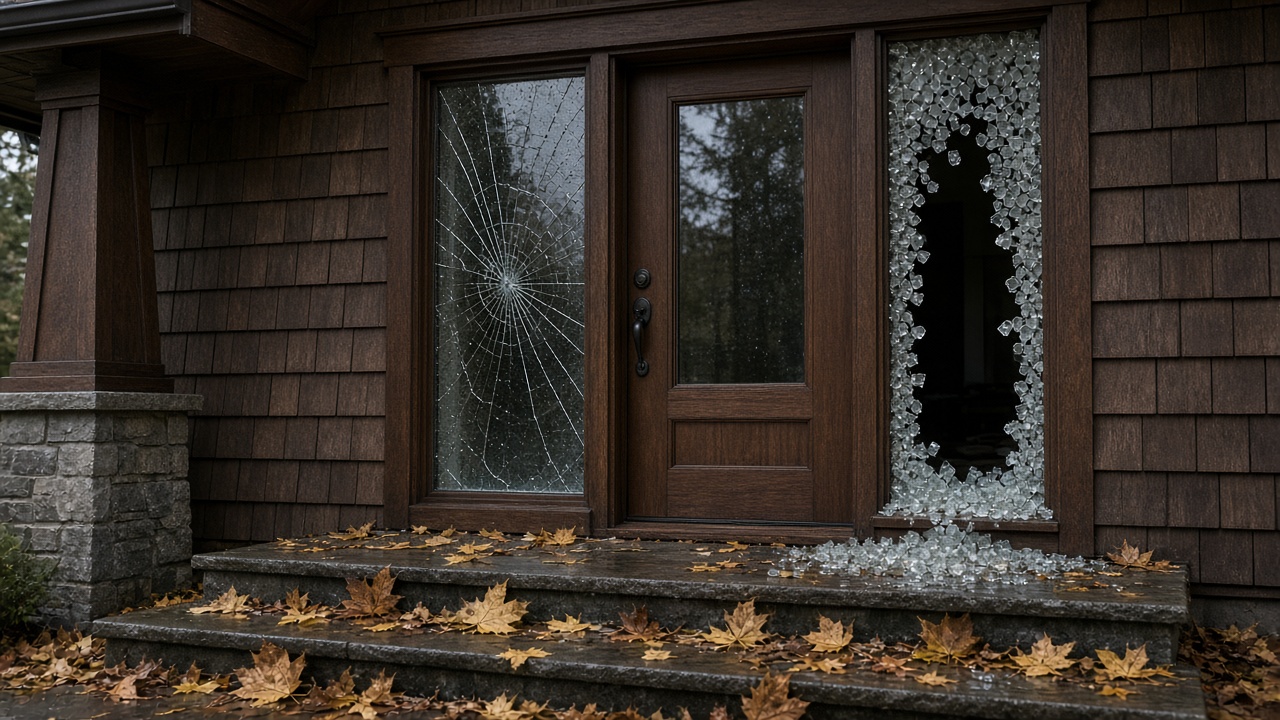
Fall storms, branch strikes, and sudden glass failures across Metro Vancouver force a second decision after the opening is safe: what goes back in—tempered safety glass, laminated security-style glass, or a combination that matches the job?
Tempered and laminated are both safety glass. They are not interchangeable. One breaks into small, blunt fragments. The other holds together when cracked so the opening stays a barrier longer. That choice matters for ground-floor doors, sidelights, patio doors, and any lite facing wind, alley access, or a busy street.
This guide is for Lower Mainland and Fraser Valley homeowners deciding glass type at replacement time—not a redo of why storm-cracked tempered cannot be patched, and not a full BC hazardous-location code walkthrough. Those stay linked. Here we stay on the security and storm-resilience tradeoffs for the permanent lite.
Quick compare: tempered vs laminated
| Question | Tempered | Laminated |
|---|---|---|
| How it is made | Heat-treated single lite (or tempered lites in an IGU) | Two or more glass layers bonded with an interlayer (often PVB) |
| When it breaks | Typically shatters into many small pebbles and falls away | Cracks, but fragments tend to stick to the interlayer |
| Security / forced entry | Opens the hole quickly once it fails | Harder to create a clear opening quickly |
| Storm / debris holdover | Once it goes, the opening is open | Often stays boarded by the cracked glass itself until you replace it |
| Common home uses | Doors, many patio door lites, showers, some low windows, railing infills as specified | Security-focused doors/sidelights, overhead glass, sound/UV-sensitive spots, higher-holdover needs |
Neither type is “always better.” Code, opening type, and your risk picture decide the shortlist. Low-E coatings and insulated glass units (IGUs) can pair with either path when the original unit was a sealed dual pane.
What “security” actually means for house glass
Home security glass is not a movie-scene claim. Practically, homeowners mean:
- Holdover — after impact, does the lite still block weather and entry while you arrange replacement?
- Deterrence — does a smash attempt take longer and make more noise?
- Right product in the right opening — a ground-floor sidelight next to a lockset is a different risk than an upper-floor bedroom lite
Laminated earns its reputation on holdover: the interlayer keeps cracked pieces together so wind, rain, and a reaching arm do not get an instant hole. Tempered earns its reputation on injury reduction when glass must fail—pebbles instead of long shards—but it does not keep the opening closed after failure.
VanCity’s residential and window replacement work covers broken and foggy units across common styles. Homes usually need a clear version of the same idea commercial buildings use: better holdover where forced entry or storm debris is the worry, tempered where code and everyday safety dominate.
Storm season: when tempered is still the right call
Coastal fall brings wind-driven rain and the odd flying branch. Tempered remains the correct (and often required) choice in many openings:
- Patio doors and many door lites where safety glass is expected for occupant protection
- Showers and other wet hazardous locations
- Locations where code or the original stamped lite already specify tempered
- Openings where a sudden pebble failure is preferred over a spiderweb that stays in place
If your tempered lite already failed, do not tape it and call it fixed. See Tempered Glass Cracked After a Fall Storm for the can’t-patch path, then use emergency board-up when the opening is open to weather or entry. When you replace it, ask whether the new lite should stay tempered-only or move to a laminated make-up where the opening and code allow.
When laminated is the smarter upgrade this wet season
Consider laminated (or a laminated make-up inside an IGU) when you are already opening the frame and any of these apply:
- Ground-floor or alley-facing glass near locks, patio doors, or basement wells
- Sidelights and door inserts where a smash creates an instant reach to the deadbolt
- Homes that have already seen break-in damage or repeated storm strikes on the same elevation
- You want the cracked lite to keep weather out longer until measured glass returns
- Sound or UV concerns on a busy street or sun-blasted elevation—ask what is realistic for your opening
Overhead glass and other applications where falling fragments are unacceptable are covered in the safety standards guide. For typical vertical windows after a fall break, the decision is simpler: holdover and slower forced entry, or tempered’s break pattern and code match?
Decision tree: pick the path before you measure
- Is the opening currently open / unsafe?
People first, then temporary cover. Use emergency glass & board-up. Glass-type debate waits until the site is secure.
- Does code (or the stamped original) require safety glass here?
Doors, many sidelights, showers, low glass, and railing-related openings often do. Start with the BC safety standards post, then refine tempered vs laminated with your glass tech.
- Is security / holdover the main reason you are upgrading?
Lean laminated (or laminated IGU) for ground-floor and lock-adjacent glass when the opening allows.
- Was the original an insulated sealed unit?
Plan an IGU with the right safety glass in the make-up—not a single thin lite in a dual-pane pocket. Fogged-but-intact seals are a different ticket than a storm hole; wet-season timing still rewards a measured unit that restores the envelope.
- Is the frame sound?
Glass-only work keeps a good sash or door. Soft or bent framing after water entry may widen the scope—an on-site look beats guessing from a phone photo.
What to tell the glass team (so the quote matches the risk)
Bring clear notes to Get A Quote:
- Opening type (picture window, sliding, casement, patio door, sidelight)
- Break pattern if already failed (pebbles vs long shards vs cracked-but-holding)
- Why you care: storm repeat risk, alley security, kids’ play area, street noise
- Whether you want like-for-like safety glass or a security-oriented upgrade where allowed
- Photos of the exterior elevation, interior sill, and any corner etch
- Strata or landlord rules if the unit is not freehold
Pricing depends on glass type, size, make-up, access, and whether board-up and permanent glass are one visit or two. Ask for the recommended tempered vs laminated path in plain language before fabrication starts.
Fall timing: choose once, then fabricate
Metro Vancouver’s wet season is a bad time to leave a temporary board up “until we decide.” Board-up is bridge protection; the permanent lite should already be on a measure-and-fab calendar. Lock laminated-for-holdover or tempered-for-code early so lead time does not stretch plywood into winter.
Homes feel heat, daylight, and street-facing security differently from storefronts—but the glass-type question is the same: what fails safely, and what still keeps weather and entry out when it cracks?
Choose the lite that matches the risk—not just the hole size
Tempered and laminated both belong in the Metro Vancouver toolkit. Tempered shines where code and injury reduction dominate. Laminated shines where holdover, forced-entry delay, and storm-cracked weather control matter. Many openings need the correct safety glass measured to the frame; some ground-floor and door-adjacent jobs deserve a security-minded upgrade while the unit is already coming out.
Get A Quote — measured tempered or laminated replacement for your opening.
Window replacement — broken and foggy residential glass, including sealed units when the frame is sound.
Residential glass — windows, patio doors, and related home glass across the Lower Mainland.
Emergency glass & board-up — 24/7 temporary protection when the opening needs attention now.
Call or text 778-239-6052, or email info@vancityglassltd.com. VanCity Glass Team helps Metro Vancouver and Fraser Valley homeowners match tempered or laminated glass to the real risk—storm, security, and wet-season comfort—not just the size of the hole.