Heating Bill Creeping Up? How Failed Window Seals Waste Energy in Vancouver’s Rainy Season
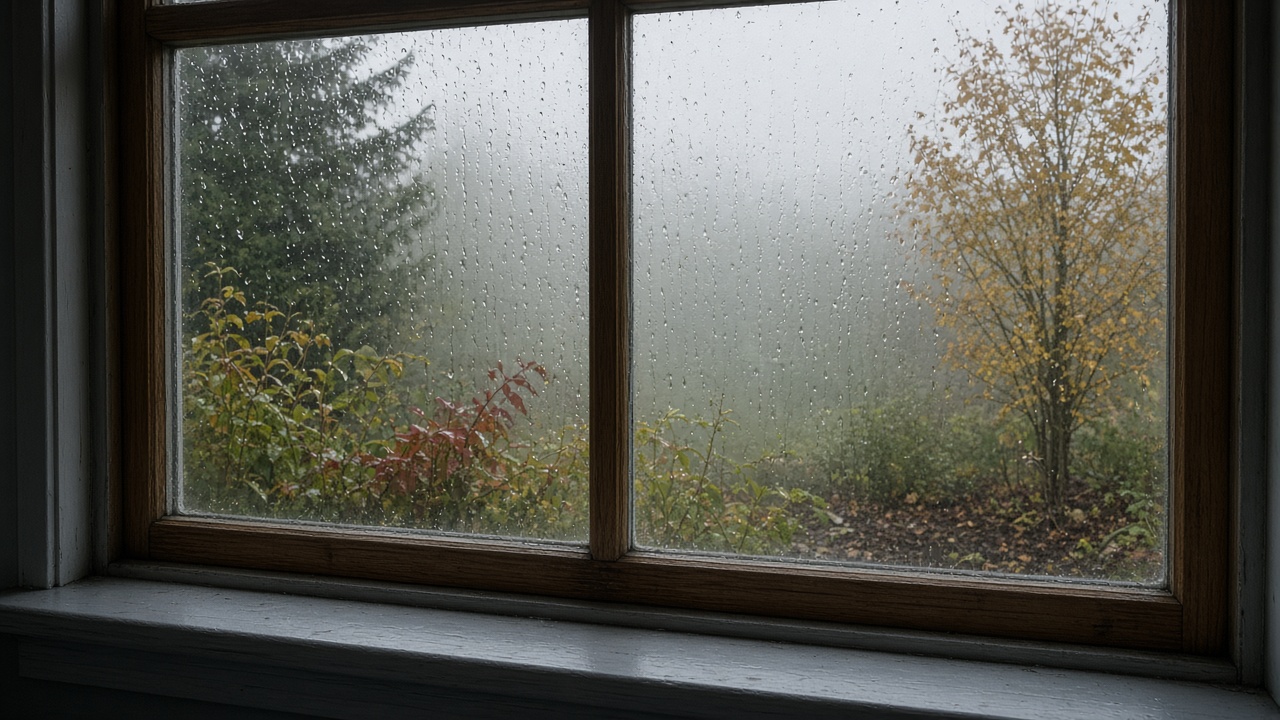
Fall in Metro Vancouver means longer rains, cooler nights, and furnaces that start earlier than you remember. If rooms still feel chilly near the glass—or your thermostat climbs while one or two panes look milky—the problem may not be your furnace at all. It may be a failed window seal.
This post is about the energy and comfort cost of seal failure during our wet season: why drafts and fog show up together, how to tell room-side condensation from between-pane fog, and when replacing the sealed unit (the IGU) restores performance without a full frame tear-out. For the mechanics of why moisture gets trapped between panes, see our evergreen guide Why Do Windows Get Foggy?. For Low-E and upgrade technology, start with energy-efficient window glass. Here we stay on rainy-season diagnosis and what to do next.
What a “failed seal” really means for heat
A modern double- or triple-pane window is an insulated glass unit (IGU): panes separated by a sealed space that often holds insulating gas. The edge seal keeps that space dry and closed. When the seal fails, moisture can enter, the insulating gas can escape, and the unit stops behaving like a thermal barrier.
You do not need a shattered pane for that to matter. A fogged but intact lite is already leaking performance. Warm indoor air meets a colder, less-insulating glass sandwich, so the room near that window fights the thermostat all season.
Common rainy-season clues:
- Cloudy, milky, or streaked haze between panes that will not wipe off
- A noticeable cold band at the sill or beside a large picture window
- One or two rooms that never catch up after the furnace cycles
- Patio door glass that looks clear from afar but hazes in morning light
Those signs point to the sealed unit—not necessarily a whole new window frame.
Why Vancouver’s rainy season makes it feel worse
Coastal humidity and long wet stretches do two things at once. They stress seals that are already aging (temperature swings, damp exteriors, years of expansion and contraction), and they make indoor comfort gaps obvious. When outdoor air is cool and damp for weeks, a failed IGU’s heat loss is harder to ignore than on a dry summer evening.
Lower Mainland homes also stack glass-heavy elevations—living-room picture windows, sliding patio doors, corner suites—exactly where seal failure shows up as a cold wall of glass. You heat the room; the failed unit quietly undoes part of that work.
This is climate depth, not a city-doorway checklist. The same pattern shows up from Vancouver through Burnaby, Surrey, and the Fraser Valley whenever wet cool weather settles in.
Fog on the glass vs condensation in the room
Not every wet pane is seal failure. Getting the type right avoids the wrong fix.
| What you see | Likely cause | Typical next step |
|---|---|---|
| Moisture between panes; wipe does nothing | IGU seal failure | Glass-unit (sealed unit) replacement |
| Moisture on the room side; clears when wiped / ventilated | Indoor humidity + cool glass | Ventilation, humidity control; seal may still be fine |
| Water on the exterior face after rain | Weather film | Cleaning; not an IGU failure |
| Broken or cracked glass with an opening | Impact / storm damage | Emergency / board-up path — different problem |
If you can wipe the haze away from the inside face, you are usually dealing with room-side condensation. If the fog lives inside the sandwich, cleaning products will not help—the unit has failed and should be replaced as glass, not “defogged” with temporary kits that do not restore insulation.
How failed seals waste energy (without the spreadsheet myths)
You do not need invented bill percentages to understand the physics in plain terms:
- Lost gas fill — The insulating space no longer performs as designed.
- Moisture film — Haze between panes scatters light and marks a unit that is no longer sealed.
- Cold-glass comfort — People turn the thermostat up to compensate for one bad elevation.
- Secondary moisture risk — Persistent cold edges and damp frames can encourage mold in framing over time (a warning in our foggy-window guide, not a guarantee of damage in every case).
The practical takeaway for fall: a failed seal is not only a cosmetic complaint. It is a comfort and efficiency leak that gets louder as outdoor temperatures drop and heat runs longer.
When you are ready for higher-performing glass (Low-E coatings, better overall assemblies), use the energy-efficient glass overview as a technology primer—and get a site-specific quote rather than relying on generic savings charts.
Glass-only IGU replacement vs replacing the whole window
Many Metro Vancouver homes have sound frames with failed sealed units. In those cases, window replacement often means replacing the glass unit, not gutting the opening:
- Remove the failed IGU
- Install a new sealed unit matched to the opening
- Leave trim, siding, and framing largely undisturbed when the frame is still sound
That approach restores clarity and insulation performance without a full renovation footprint. Full frame replacement still makes sense when frames are rotten, out of square, or you are upgrading the entire elevation—but failed seals alone do not automatically mean a gut job.
Patio doors follow the same logic: fogged sliding or French-door lites are often a glass-unit conversation. See patio door glass when the issue is the lite, not the whole door system.
A short rainy-season checklist before you call
- Confirm between-pane fog (cannot wipe away) vs room-side moisture.
- Note which elevations feel coldest and whether haze is spreading to neighbouring units.
- Photograph cloudy panes in daylight (wide + close).
- Check patio doors and large fixed windows first—they dominate heat loss when seals fail.
- Book a quote for IGU / sealed-unit replacement via Get A Quote rather than waiting for every lite to fail.
If glass is broken open to weather, that is an emergency opening—not a seal-failure energy post. Use emergency glass for holes, storm hits, and board-up needs.
Residential comfort, strata buildings, and “one foggy window”
Seal failure often starts on a single lite and spreads as adjacent units age. Homeowners on residential service can usually sequence replacements room by room. In strata buildings, common-area glass and unit windows may follow different approval paths—flag the property manager early if the fogged glass sits on a shared elevation or balcony door with building responsibility.
Either way, delaying a clearly failed IGU through a Lower Mainland wet season means living with the draft and the haze until spring. Replacing the sealed unit restores the view and the thermal barrier you paid for when the window was new.
Get clear glass—and a room that holds heat again
Failed seals are a rainy-season problem you can solve without rewriting your whole heating system. Diagnose between-pane fog, prioritize the coldest elevations, and replace the insulated glass unit when the frame is still sound.
Get A Quote — tell us which rooms feel cold and which panes are fogged.
Window replacement — how sealed-unit work fits residential openings.
Residential glass — broader home glass services across Metro Vancouver and the Fraser Valley.
Call or text 778-239-6052, or email info@vancityglassltd.com. VanCity Glass Team replaces failed IGUs and fogged patio-door glass so your heat stays in the room—not lost through a seal that has already given up.